Pool safety & code
Arizona and Yuma pool fence law, in plain English
Yuma Pool Pros · sources checked September 1, 2026
As of September 2026, Arizona law (A.R.S. § 36-1681) requires most residential pools to be enclosed by a barrier at least 5 feet tall, with no opening a 4-inch sphere can pass through, set at least 20 inches back from the water's edge, with a self-closing, self-latching gate that opens outward and latches at least 54 inches above the ground. Inside Yuma city limits, City Code § 154-15.05 adds its own enclosure and placement rules on top.
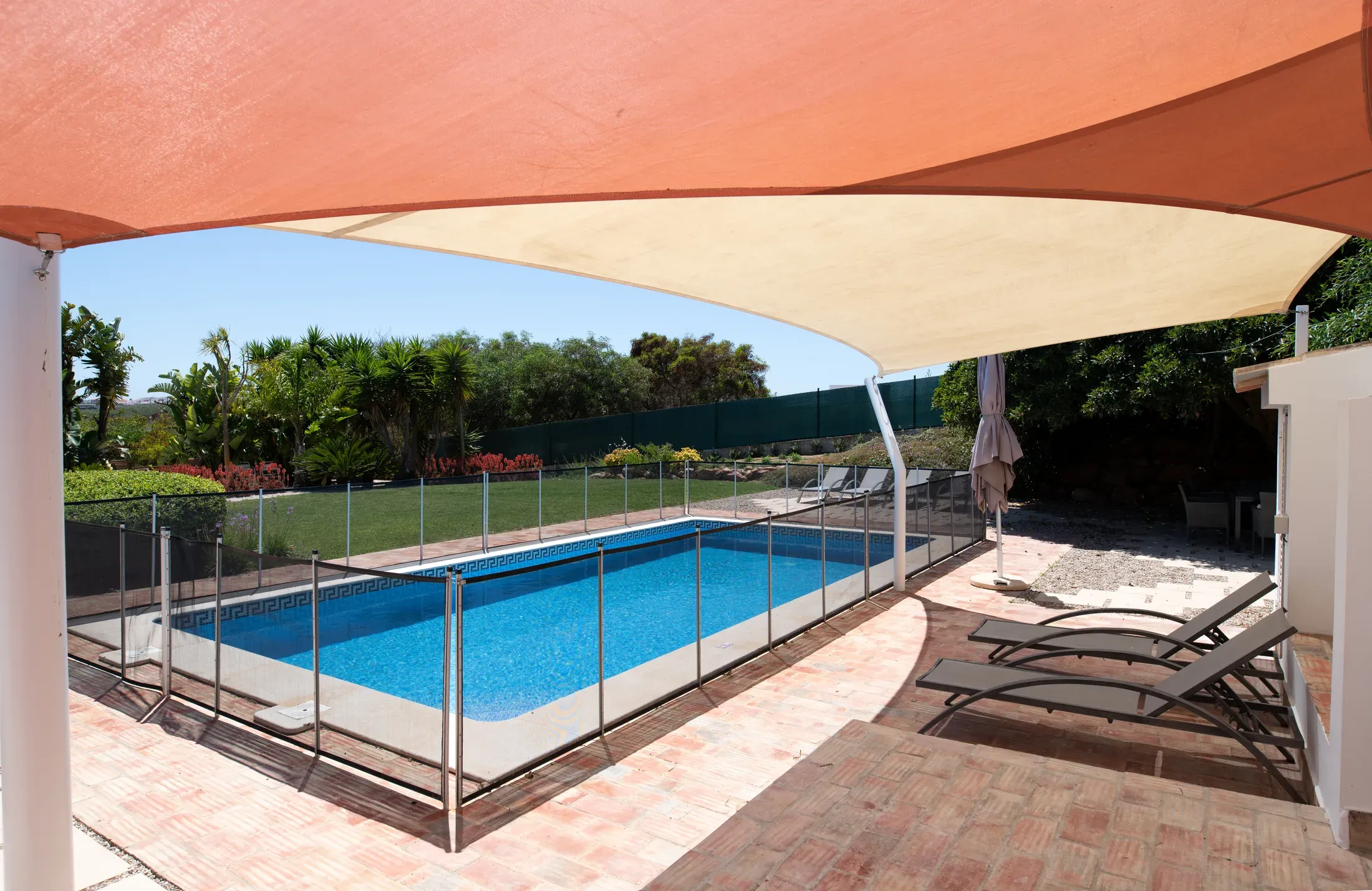
Most pool-fence articles online quote one national guideline and stop. In Yuma there are actually three layers that can apply to the same backyard: the state statute, the city's own municipal code, and the safety guidance the City of Yuma itself publishes. They do not say identical things, and which ones bind you depends on where the house sits. This page walks through all three, with the official sources linked.
Layer 1 -- the state floor: A.R.S. § 36-1681
Arizona's pool barrier statute applies to any outdoor swimming pool, spa, or other contained body of water that is 18 inches or more deep at any point and wider than 8 feet at any point -- deep enough that a kiddie pool is out, but nearly every real backyard pool is in. For those pools, the statute requires:
- A barrier at least 5 feet tall, measured on the outside face.
- No opening a 4-inch-diameter sphere can pass through -- the classic test for gaps between fence bars, under gates, and between the barrier and grade.
- At least 20 inches between the barrier and the water's edge -- a child who gets over it should not fall straight into the pool.
- Nothing climbable on the outside face that works as a foothold.
- A gate that opens outward, away from the pool, and is self-closing and self-latching, with the latch at least 54 inches above the ground. If the release sits lower than that, it must be on the pool side, at least 5 inches below the top of the gate, with no opening larger than half an inch within 24 inches of it. A padlock or keyed/combination lock is an accepted alternative.
The statute carries real exemptions worth knowing before spending money: it does not apply to a residence where every resident is six years of age or older, and an above-ground pool with non-climbable sides at least 4 feet high complies when its access ladder is removed and secured while the pool is not in use. Two cautions on those exemptions, though. First, the age exemption is the state's -- a city or county code that requires an enclosure anyway still applies (see Layer 2). Second, residents change: a statute-exempt house stops being exempt the day a young child moves in, and insurers and buyers routinely expect a compliant barrier either way.
One more structural point that shapes everything local: the statute is explicitly a floor, not a ceiling. Cities and counties may adopt stricter rules -- and Yuma has.
Layer 2 -- inside city limits: Yuma City Code § 154-15.05
The City of Yuma's own zoning code has a swimming-pool section that applies to municipal, commercial, and private pools in the city. Its enclosure language will look familiar -- a fence or wall at least 5 feet tall, with no openings greater than 4 inches in any dimension, built so it does not afford climbing, and self-closing, self-latching gates -- but it is a separate legal requirement with two practical differences from the statute:
- The city code states no all-residents-six-or-older exemption in its enclosure rule. Inside city limits, do not assume the state exemption gets you out of fencing the pool -- ask the city's Building Safety division before skipping a barrier on that basis.
- It also governs where the pool itself can sit: pools must respect the front-yard setback of the underlying zoning district and stay at least 5 feet from side, rear, and street-side property lines. Pool equipment needs a 4-foot side setback for fire access (a zero rear setback is permitted). Planning a new pool or moving equipment during a remodel runs into these lines before any fence question comes up.
Where both layers apply, the practical rule is simple: meet the stricter reading of each requirement. A barrier that passes the statute's 5-foot, 4-inch-sphere, 54-inch-latch test and the city's no-openings-over-4-inches, non-climbable test passes both.
Outside city limits: Fortuna Foothills and the county areas
A large share of the Yuma-area pool stock -- all of Fortuna Foothills, for a start -- sits in unincorporated Yuma County, where the city's § 154-15.05 does not apply. The state statute still does, and county building-permit rules govern new pool and barrier construction there; check with Yuma County Development Services before building or altering a barrier outside city limits rather than assuming either the city's rules or nobody's apply. The Fortuna Foothills page covers this jurisdiction line in more detail.
Layer 3 -- what the city recommends beyond the code
The City of Yuma, through the Greater Yuma Water Safety Alliance, publishes drowning-prevention guidance that goes past the legal minimum -- its June 2025 release notes that about 70% of child drownings happen when a pool isn't actively in use, and recommends layering protections: four-sided fencing that fully separates the water from the house, gate alarms, surface and underwater pool alarms, power-operated covers, and a designated "water watcher" whenever the pool is in use.
One number in that guidance deserves a flag, because it trips people up: national safety material (including the layers-of-protection framework the city cites) often describes pool fencing as "at least 48 inches." In Arizona the legal minimum is 60 inches -- 5 feet -- which is stricter. Treat 48-inch figures found in national articles as below what Arizona law requires, not as an option.
A 5-minute self-check for an existing pool
- Measure barrier height from the outside at its lowest point -- erosion and landscaping quietly shorten fences. It should read 60 inches or more.
- Take anything round that's 4 inches across and try it in every gap: between bars, under the gate, under the fence line, at the latch cutout.
- Open the gate halfway and let go. It should close and latch on its own, every time, without a push. A sagging gate that needs a lift to latch fails the self-latching requirement in practice.
- Check the latch height -- 54 inches or higher from the ground, unless it's a pool-side release meeting the statute's alternative spec.
- Walk the outside face looking for footholds: cross-members, planters, equipment, furniture, block courses. Non-climbable means from a child's point of view.
- Confirm the gate swings away from the pool. Outward-opening is the statute's requirement and the least-known one on this list.
If any of those fails, the fix is usually fence or gate hardware work -- and in Arizona that kind of repair sits on the licensed side of the trade line once it crosses the handyman-exemption threshold. The licensing explainer covers which pool jobs need an ROC-licensed contractor and how to verify one in about two minutes.
Official sources
- A.R.S. § 36-1681 -- Pool enclosures; requirements; exceptions (Arizona Legislature, primary statute text)
- City of Yuma Code § 154-15.05 -- Swimming Pools (official codified ordinance)
- "Barriers, Alarms, and Supervision Among Keys to Drowning Prevention" (City of Yuma / Greater Yuma Water Safety Alliance, June 11, 2025)
This page is local code research, checked against the sources above on September 1, 2026 -- it is not legal advice, and ordinances get amended. For a permit-level answer about a specific property, confirm with the City of Yuma Building Safety division (inside city limits) or Yuma County Development Services (unincorporated areas).
Barrier not passing the self-check?
Gate, latch, and fence-repair work on pool barriers is licensed contractor territory in Arizona once it crosses the handyman threshold. Send what you found and get matched to a local company suited to that work.
Get matched for a quote