Repair & equipment
Pool repair in Yuma: what fails, what it runs, who may fix it
Yuma Pool Pros · figures checked September 1, 2026
As of September 2026, a typical pool repair job runs about $243 to $1,213 all-in (national cost data -- Yuma-specific repair pricing is rarely published), with the common line items ranging from a $50–$300 pump repair to a $1,500–$2,000 filter replacement. In Arizona, equipment repair is licensed contractor work -- unlike routine cleaning, which legally is not.
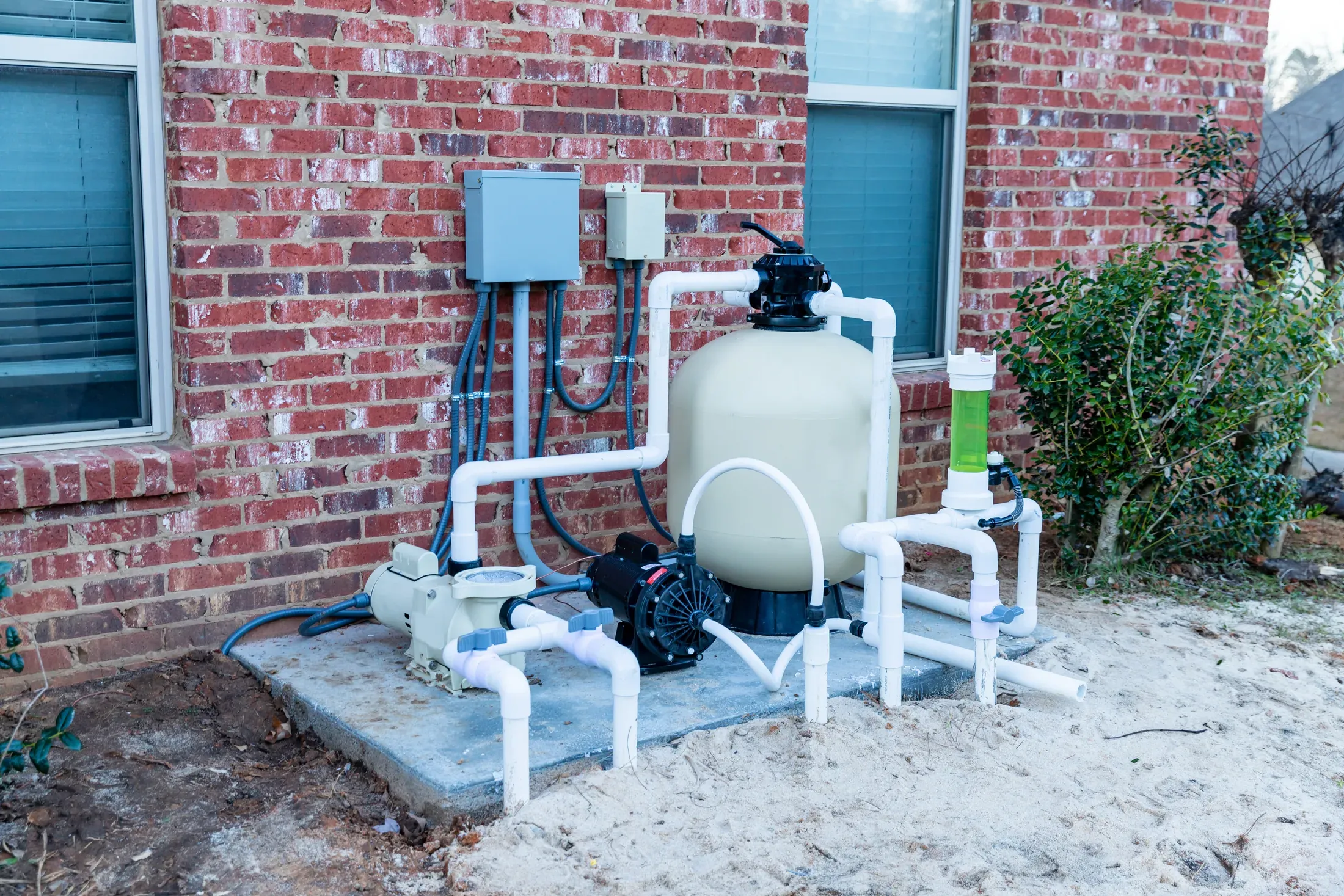
This page is the hub for the repair side of pool ownership in Yuma: the typical cost ranges, why desert conditions shorten equipment life here, and the licensing line that decides who may legally do the work. Three problems get their own deeper pages -- leak detection, heater repair, and filter replacement.
Typical repair ranges
These are national 2026 figures (Angi cost data) -- almost no one publishes Yuma-specific repair pricing, so treat them as the shape of the market, not a local quote. Where a real published Yuma figure exists, the linked spoke page says so.
| Job | Typical range (national, 2026) | Notes |
|---|---|---|
| Pump repair | $50–$300 | Seals, capacitors, o-rings; the most common call |
| Pump replacement | $700–$1,300 | Variable-speed upgrades sit at the top of the range |
| Filter replacement | $1,500–$2,000 | Full system swap -- see the filter page for cartridge-vs-DE-vs-sand detail |
| Heater repair | $160–$730 | Igniters, sensors, boards -- see the heater page |
| Leak detection (diagnosis) | $100–$500 | A published Yuma rate exists for this one -- the leak page compares it |
Averaged across job types, a completed repair lands around $243–$1,213 total. Resurfacing and remodels are a different category entirely (five figures) and outside this page's scope.
Why Yuma is hard on pool equipment
- Mineral-heavy water. City tap water arrives at 18–22 grains per gallon of hardness (the City of Yuma's own figure), and evaporation concentrates it from there. Scale builds on heater heat exchangers, salt-cell plates, seals, and cartridge fabric -- shortening the life of exactly the components in the table above.
- Heat and sun. Triple-digit ambient temperatures most days June through September cook pump motors and o-rings, fade plastics, and push daily evaporation to the point where an autofill can quietly mask a real leak for months.
- Run-time. A Yuma pool filters more hours per year than the national assumption baked into equipment lifespans -- parts simply accumulate more duty cycles here.
The licensing line, in one paragraph
Arizona draws its licensing line at job scope, not job title: routine cleaning and chemical balancing need no contractor license, but equipment repair, replacement, or structural/plumbing/electrical pool work requires an active ROC CR-6 / R-6 / C-6 license once past the handyman exemption (under $1,000 and no permit). Practically: the person quoting your pump replacement should have an ROC number you can check in two minutes, and a great weekly cleaner may legitimately not have one -- for cleaning, that's fine. Full walkthrough: does my pool cleaner need a license in Arizona?
Before you approve a repair quote
- Ask whether the fix is a component repair or a replacement recommendation -- the table above shows they can be an order of magnitude apart on the same symptom.
- For anything beyond a trivial part, ask for the contractor's ROC license number and check it at the Registrar of Contractors' public search.
- Ask what the failure's root cause was. In Yuma, "scale" and "ran dry" answers point at maintenance fixes that stop a repeat bill.
- On a pump replacement, ask about variable-speed models -- higher upfront within the range above, but they cut the running cost of Yuma's long filter hours.
Have a symptom, not a diagnosis?
Describe what the pool is doing -- noise, cloudy water, falling level, dead heater -- and the request goes to a local company licensed for the repair work it points at.
Get matched for a quote