Cost research
What pool resurfacing costs in Yuma
Yuma Pool Pros · figures checked at each source October 20, 2026
As of October 2026, resurfacing a typical in-ground gunite pool in Yuma, AZ runs about $6,000–$15,000 -- roughly $6 to $8 per square foot for standard white plaster and $7 to $15 for quartz, aggregate, or pebble finishes, with full tile well above that. No Yuma pool company publishes resurfacing prices, so those are national benchmarks; the nearest published Arizona figure is Phoenix, where the average job runs $11,363 (Angi, April 2026).
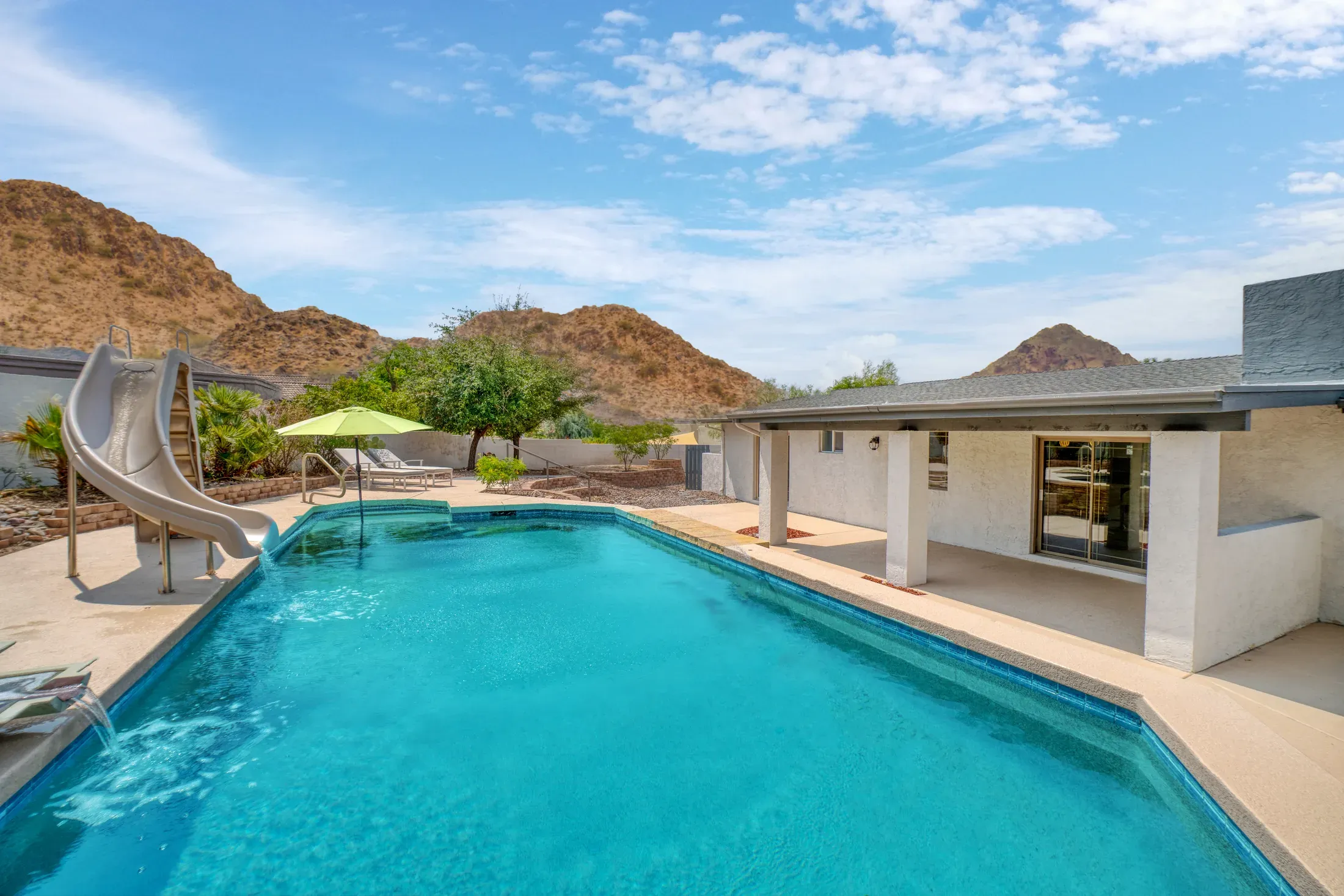
This page is the resurfacing companion to the repair & equipment hub, which covers pumps, filters, heaters, and leaks -- the three- and four-figure jobs. Resurfacing is the five-figure one: the interior finish of a gunite pool is a wear item, and in Yuma it wears faster than the national lifespans assume. Below: what each finish costs, what moves the number here, when a surface is actually done versus just stained, and who may legally do the work.
Cost by finish
Resurfacing is priced by interior surface area -- floor plus walls, which for a common residential pool lands somewhere around 1,000 square feet -- and by the finish going on. The table uses HomeGuide's national 2025–2026 data on that 1,000-square-foot basis; a small Yuma play pool scales down, a large diving pool with a tanning ledge scales up.
| Finish | Per sq ft | Typical total (1,000 sq ft) | Expected life |
|---|---|---|---|
| Paint (epoxy / rubber-based) | $1–$2 | $1,000–$2,000 | 5–7 years |
| Standard white plaster (marcite) | $6–$8 | $6,000–$8,000 | 7–12 years |
| Quartz-aggregate plaster | $7–$10 | $7,000–$10,000 | 10–15 years |
| Exposed aggregate | $6–$15 | $6,000–$15,000 | 15 years or more |
| Pebble | $7–$15 | $7,000–$15,000 | 15–20+ years |
| Thermoplastic polymer (EcoFinish-type) | $10–$15 | $10,000–$15,000 | not stated |
| Full tile | $8–$30+ | $8,000–$30,000+ | not stated |
Ranges are compiled from published Yuma-specific prices and 2025-2026 Arizona and national cost sources, each labelled with how local it actually is and when it was checked. They are research, not a quote. Source: HomeGuide, "How Much Does Pool Resurfacing Cost?" by Kristen Cramer, Apr 25, 2025 (national project data, 1,000 sq ft basis); Phoenix figures from Angi, "How Much Does Pool Resurfacing Cost in Phoenix, AZ?" by Kate Fann, updated Apr 17, 2026. National average across all finishes: $11,000; the floor ($1,500) is paint on a small pool and the ceiling ($50,000) is full tile on a large one.
Reading the table for a Yuma pool
- Standard plaster is the cheapest real finish and the shortest-lived. At $6,000–$8,000 for a typical pool it is the number most Yuma owners have in mind -- and the finish that Yuma water etches and scales soonest. Budget for doing it again at the short end of its 7–12-year range unless water chemistry is kept tight.
- Quartz plaster is the common upgrade. A modest premium over white plaster buys a harder, more stain-resistant surface rated 10–15 years -- often the best cost-per-year answer for a pool that sees a full Yuma summer every year.
- Pebble costs the most of the plaster family and lasts the longest. HomeGuide puts a pebble job on a large 800- to 1,000-square-foot backyard pool at $8,000–$20,000, with a 15–20+ year life. The texture is harder on feet, which matters for a pool used daily.
- Paint is not resurfacing. It is a 5–7-year cosmetic coat that has to be stripped before any real finish goes on later. Under Yuma sun it tends toward the short end.
- Fiberglass shells are refinished, not replastered. A gelcoat refinish on a fiberglass pool runs $7,000–$15,000 nationally -- a different process from the gunite work the rest of this page describes.
The nearest Arizona benchmark: Phoenix
Angi's Phoenix cost page (updated April 2026) is the closest published geography to Yuma and shares the same climate pressures -- extreme heat, UV, hard water, and mineral buildup are named there as the drivers of surface damage. Its figures: an average resurfacing job of $11,363, a typical range of $6,198–$15,495, labor at $53–$63 per hour plus materials, draining at $181–$232 plus about $258 for cleaning the empty shell, and refilling at roughly $56.82 per 5,000 gallons of water. Those line up closely with the national range above, which is the useful takeaway: there is no evidence Arizona resurfacing prices sit meaningfully below national, so a Yuma quote inside the national range is normal, not inflated.
One caution on that Phoenix page: it also lists per-pool-size totals that contradict its own average by a wide margin. Those rows are not used here.
What moves the price on a Yuma job
- Surface area and shape. The square-foot rate is the honest unit. A deep end, steps, benches, a tanning ledge, and a spa spillover all add interior surface -- and hand-troweled detail work -- beyond what the pool's footprint suggests.
- The finish. Per the table, the swing from white plaster to pebble on the same pool is the single biggest line item a homeowner controls.
- What's under the old finish. A sound surface can be prepped and bonded over; a surface that has delaminated, or that has already been resurfaced once or twice, usually gets chipped out down to the gunite first. Chip-out is labor at $45–$110 per hour nationally, and the quote should say which prep the price assumes.
- Cracks and leaks. Structural cracks get repaired before the new finish goes on -- resurfacing over a leak buries it. If the pool has been losing water, read the leak detection page first and get that diagnosed as its own line item.
- Waterline tile and coping. Resurfacing is the natural moment to replace tile that has scaled, cracked, or popped, and tile is priced separately on top of the finish. In Yuma the waterline band takes the worst of the calcium scale, so this add-on comes up on most jobs.
- Draining and refilling. Nationally, draining and cleaning the shell runs $600–$650; refilling by hose $40–$400 or by water delivery $400–$2,000. The water itself matters more here than the dollar figure: Yuma tap arrives at 18 to 22 grains per gallon of hardness, so a fresh fill over brand-new plaster needs its calcium, alkalinity, and pH balanced from day one -- new plaster plus hard water is exactly how a surface starts scaling in its first month.
- Timing and heat. See the next section -- a job that has to be squeezed into summer costs more in risk than in dollars.
Why Yuma surfaces wear faster, and why timing matters
Three things on this site's other pages come together on resurfacing. First, mineral load: the 18–22 gpg fill water concentrates with every month of desert evaporation, and high calcium grows scale on plaster while low calcium etches it -- the water testing guide calls calcium hardness "Yuma's battleground number" for that reason. Second, sun: UV and triple-digit heat most days June through September push sanitizer demand and water temperature up, which accelerates both staining and the chemistry swings that attack plaster. Third, duty cycle: a Yuma pool is used and filtered most of the year, so a finish accumulates its lifetime of wear faster than a pool that sits under a cover for five months.
The timing consequence is practical. As the green pool recovery guide notes, an empty gunite shell is structurally vulnerable -- groundwater can lift it, and Yuma's summer sun can crack exposed plaster in a day or two -- and fresh plaster that cures too fast in extreme heat is weaker and more prone to early problems. Local pros therefore prefer to resurface in the cooler months, keep the drained window as short as the job allows, and know where the property's hydrostatic relief valve is before the pump starts. If a surface fails in July, the right question for the contractor is how they manage heat during the cure, not just the price.
Resurface, acid wash, or patch?
Not every ugly surface needs $6,000–$15,000 of work. Three tiers, cheapest first:
| Option | Typical cost (national) | What it fixes -- and doesn't |
|---|---|---|
| Chlorine or acid wash | $300–$450 chlorine; $300–$700 acid | Removes mineral and algae staining from a structurally sound surface. An acid wash strips a thin layer of plaster each time, so it buys a stained surface a few more years at most -- it does not fix flaking, pitting, or roughness. |
| Spot patching | Priced per job; small repairs fall inside the hub's $243–$1,213 typical repair band | A few localized hollow spots or chips on an otherwise sound finish. Patches rarely match in color and tend to telegraph; past a handful, the pool is telling you it's time. |
| Full resurfacing | $6,000–$15,000 | Widespread delamination, roughness, pitting, structural cracks (repaired first), or a finish at the end of its life. The only fix that resets the clock. |
Signs the surface is actually done
These are the symptoms the cost aggregators and local pros agree on. One of them is a maintenance item; several together are a resurfacing quote.
- Flaking, peeling, or delaminating plaster -- the surface lets go in sheets or patches
- Chips, pits, or cracks you can feel with a foot or a brush
- Stains or discoloration that survive brushing, a chlorine wash, and an acid wash
- A rough, sandpaper-like texture on the floor and walls that scrapes skin
- Pebbles or aggregate coming loose from a pebble finish
- Corroded or crumbling tile grout along the waterline
- Chalky residue at the edges and a plaster surface that reads as "etched"
How long it takes
Nationally, the resurfacing work itself takes about 5 to 7 days from drain to refill, and some finishes need another 7 to 10 days to cure before normal use. Add the refill -- a hose fill of a typical pool is a multi-day affair, which is why water delivery exists -- and the start-up chemistry period, during which new plaster needs daily brushing and careful balancing. Realistically, a Yuma resurfacing job takes the pool out of service for two to three weeks, which is another argument for scheduling it in the off-season rather than at the start of swim season.
Licensing: this is not cleaning
Arizona draws its contractor-licensing line at job scope. Routine cleaning and chemical balancing are exempt; equipment repair and structural work are not, and resurfacing is squarely structural -- a five-figure job far past the $1,000 handyman-exemption threshold, so the exemption cannot apply at any realistic resurfacing price. The company doing the work should hold an active Arizona ROC license in a swimming-pool classification, and the person quoting it should hand over the ROC number without hesitation. The licensing explainer walks through the two-minute registry check. Whether a specific resurfacing scope also needs a building permit depends on what else is in the job -- ask the contractor what they will pull, and confirm with the local building department if the answer is vague.
Before you sign a resurfacing quote
- Ask for the interior square footage the price is based on, and the per-square-foot rate. Two quotes can only be compared on the same area.
- Ask whether the price assumes a bond coat over the old surface or a full chip-out, and what happens to the price if the old plaster turns out to be delaminated once the pool is empty.
- Ask what the quote includes: draining, crack repair, waterline tile, coping, refill water, and start-up chemistry are each commonly separate.
- Ask how the crew manages heat if the job falls anywhere near summer -- shading, timing, and cure method -- and how long the shell will sit empty.
- Ask about the finish warranty and what the manufacturer requires of the start-up water chemistry to keep it valid; in Yuma water that start-up is not optional.
- Ask for the ROC license number and check it.
Resurfacing questions Yuma pool owners ask
How much does it cost to replaster a pool in Yuma?
As of October 2026, standard white plaster runs about $6,000–$8,000 for a typical in-ground gunite pool, or $6 to $8 per square foot of interior surface (national HomeGuide data; no Yuma company publishes a resurfacing rate). Quartz plaster and pebble finishes cost more up front and last longer, which is the real decision on most Yuma jobs.
How often does a pool need resurfacing in Yuma?
Nationally, every 7 to 15 years depending on the finish -- standard plaster at the short end, pebble at the long end. Yuma pools tend to sit toward the shorter end of a finish's range because hard fill water, intense sun, and near year-round use all wear plaster faster than the national assumption; keeping calcium hardness and pH in range is what stretches it.
Can a pool be resurfaced in a Yuma summer?
It is risky, and many local pros prefer the cooler months. An empty shell in triple-digit heat can crack exposed plaster within a day or two, and fresh plaster cures badly in extreme heat, so resurfacing in Yuma is usually scheduled for fall through spring when the drained window and the cure are both easier to manage.
Does a pool resurfacing contractor in Arizona need a license?
Yes. Resurfacing is structural pool work priced far above Arizona's $1,000 handyman-exemption threshold, so it requires an active Arizona ROC license in a swimming-pool classification -- unlike routine cleaning, which does not. Ask for the ROC number and check it before signing; the licensing explainer on this site walks through the two-minute lookup.
Want a real number for your pool?
Published ranges bound the market; only a look at the shell prices it. One request, matched to a local company licensed for resurfacing work.
Get matched for a quoteSources, checked October 20, 2026: HomeGuide, "How Much Does Pool Resurfacing Cost?" by Kristen Cramer, Apr 25, 2025 (national project data, 1,000 sq ft basis) (https://homeguide.com/costs/pool-resurfacing-cost); Angi, "How Much Does Pool Resurfacing Cost in Phoenix, AZ?" by Kate Fann, updated Apr 17, 2026 (https://www.angi.com/articles/how-much-does-it-cost-resurface-swimming-pool/az/phoenix); City of Yuma Utilities water FAQ for tap hardness. Wash and repair-band figures are the ones already published on this site's green pool recovery guide and repair hub (national, Angi, August 2026). Licensing threshold: A.R.S. § 32-1121(A)(14).